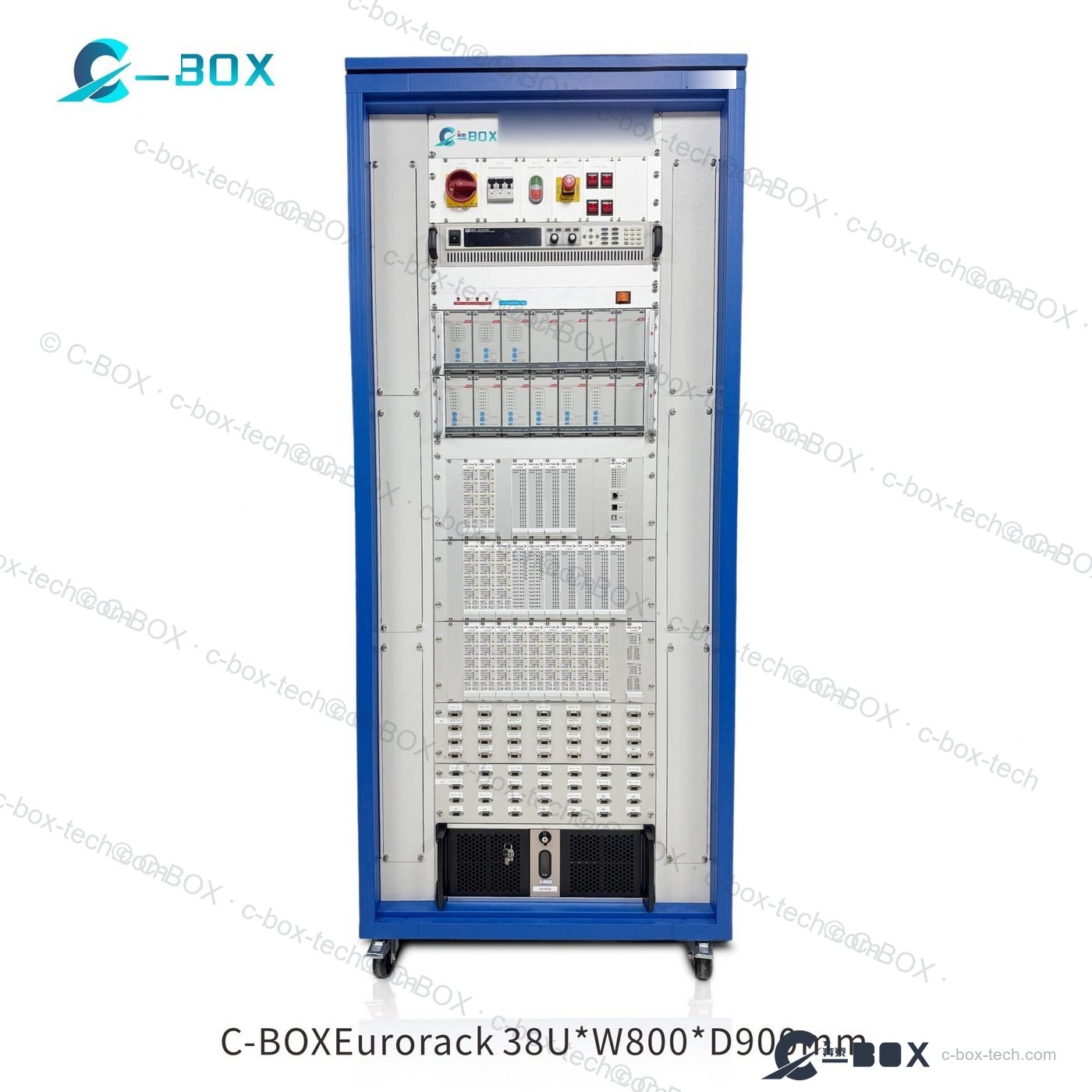
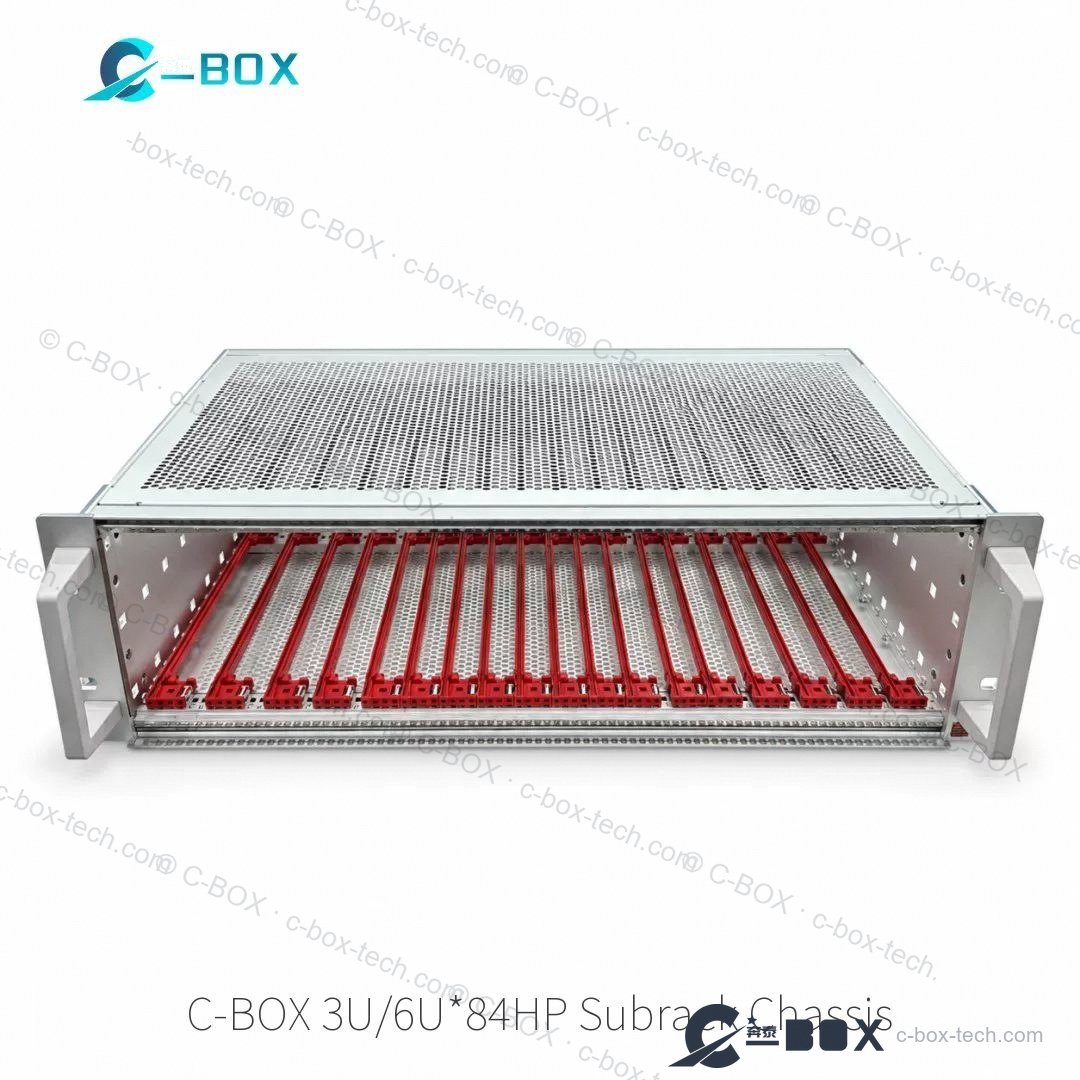
Product line 03 / 12 · Climate Control
Keep the rack cool without giving up rack space — slim 1U fan trays with temperature control, filtration and EMC-shielded options.

Forced-air cooling is the cheapest reliability you can add to a 19″ system. C-BOX fan units mount in a single rack unit at the top of the cabinet or above a subrack, pull hot air out of the stack, and are available with a thermostat so fans only run when they are needed. EMC-shielded versions keep the cabinet's shielding concept intact; replaceable filter mats keep dust out of the electronics.
| Height | 1U (44.45 mm), 19″ panel |
| Control | thermostat / manual switch / speed control |
| Supply voltage | 115 / 230 VAC · 48 VDC on request |
| EMC version | shielded housing with gasketing |
| Filter | replaceable mat, washable |
| Mounting | top-of-cabinet or above subrack |
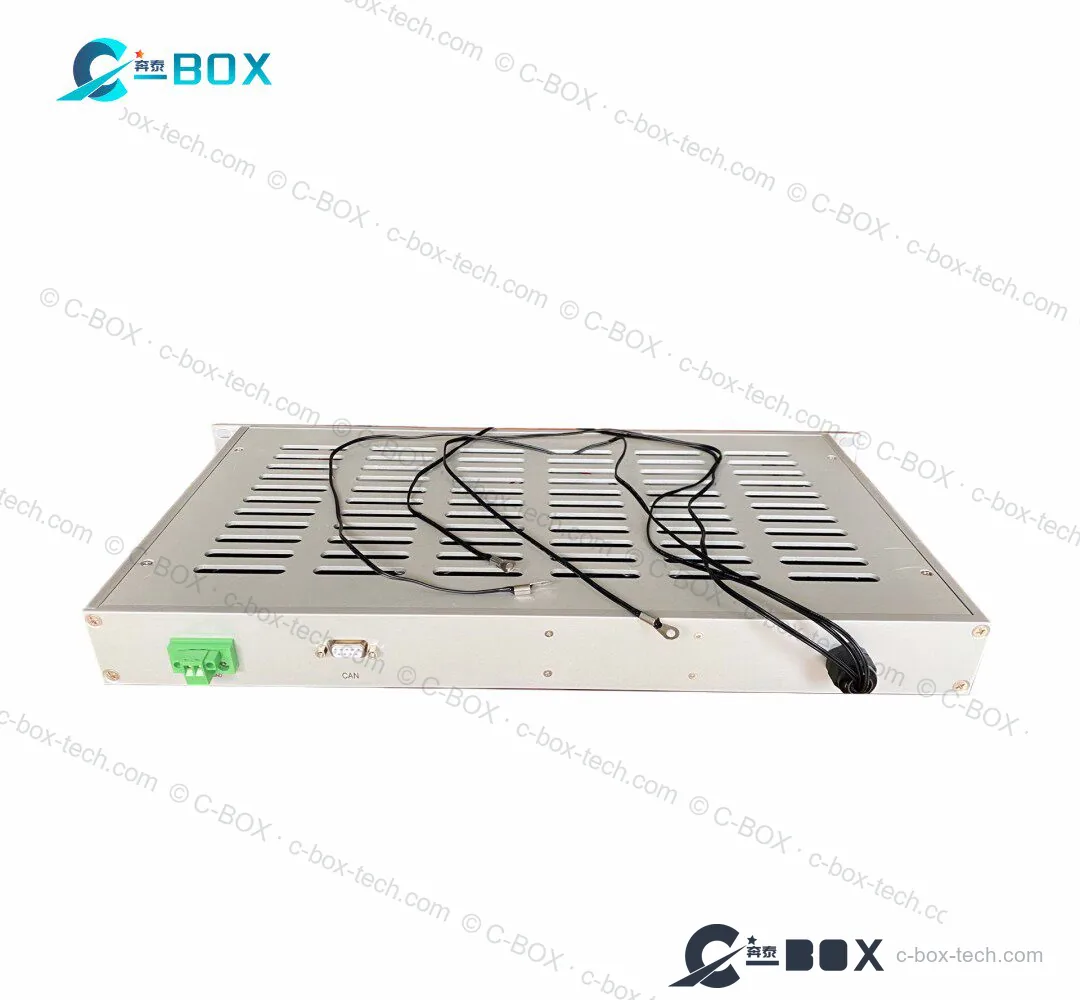
Two controller families for 19″ cabinets and subrack dust covers — a high-end line with thermostat sensor control and a standard 4-fan line. Custom voltages and EMC-shielded housings on request.
1U 19″ controller with external temperature sensor and thermostat switching — automatically keeps cabinet airflow within the set window.
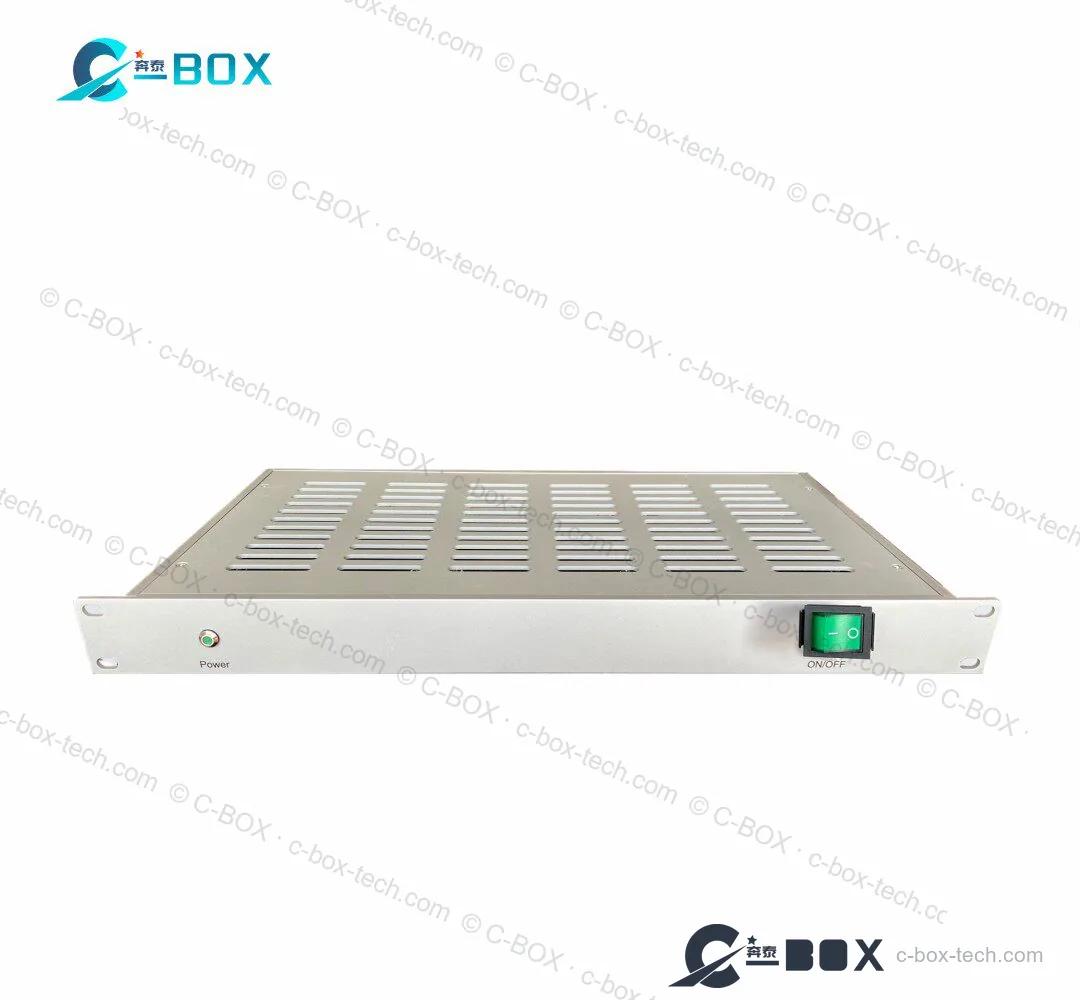
1U four-fan tray for top-of-cabinet or above-subrack mounting — forced extraction matched to subrack pressure drops.
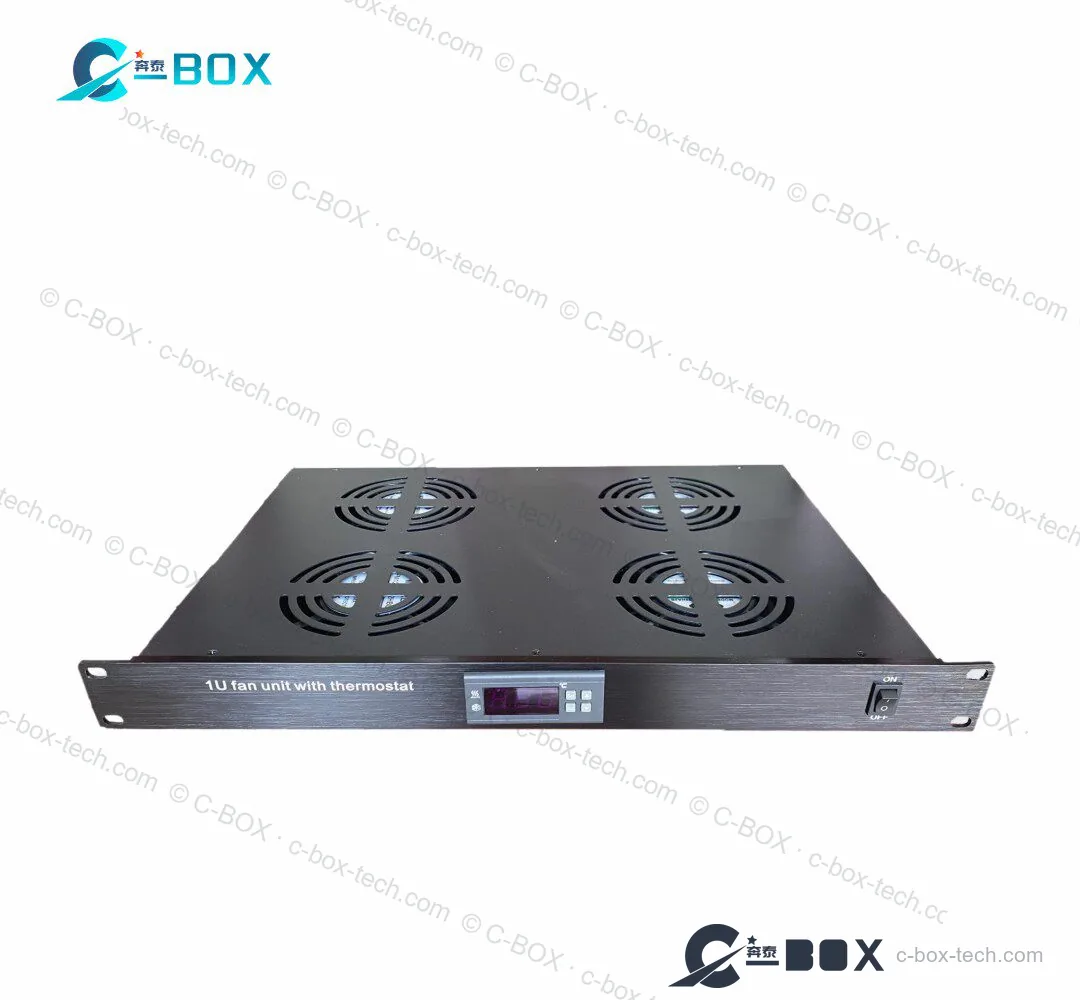
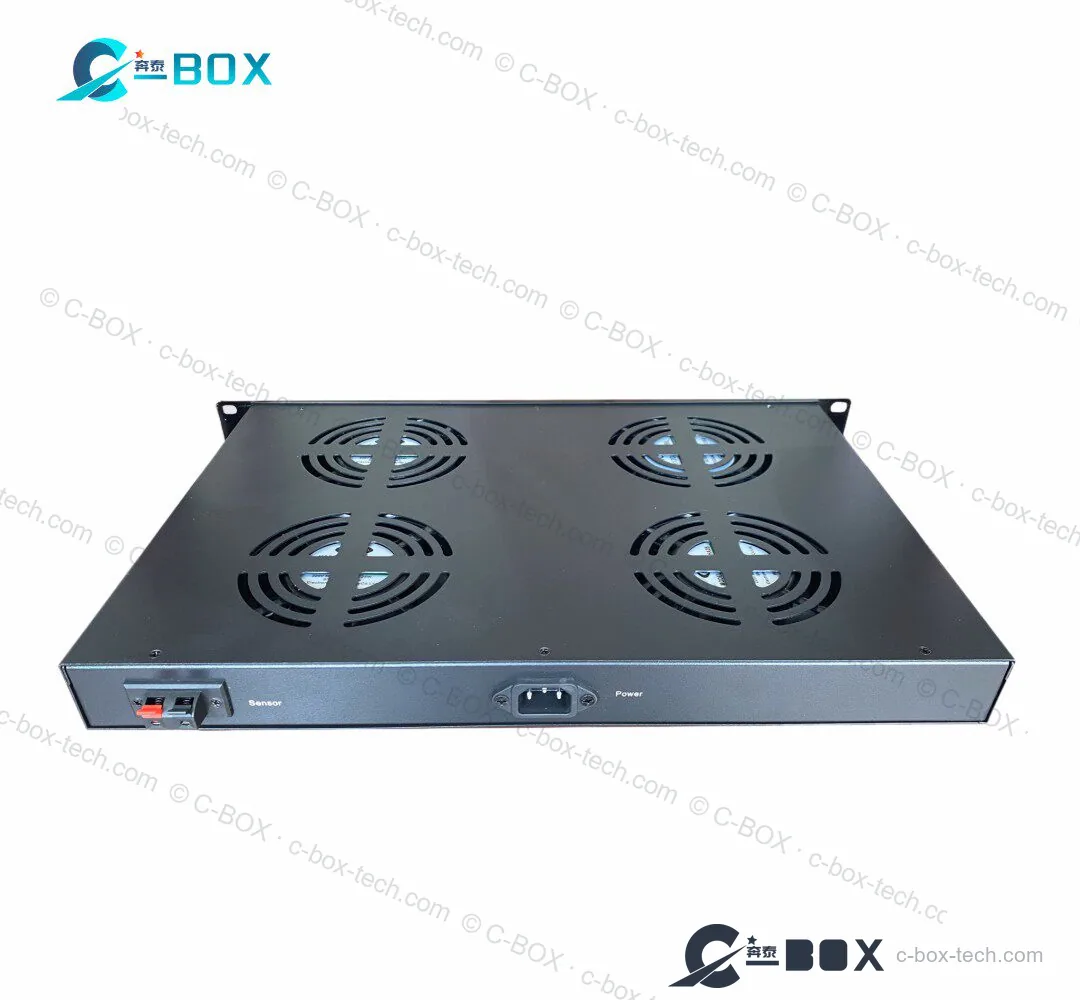
Same interface dimensions as the nVent SCHROFF equivalents — our own tooling, material and finish.
Every model has its own page with specifications and RFQ. Use your browser search (Ctrl/Cmd+F) on this page, or send us the number and we will quote it.
A fan tray is specified by airflow in m³/h, but what the rack actually needs is enough air to remove the heat at an acceptable temperature rise. Those two numbers are related by a formula, not by a catalogue ranking.
For air at sea level, the airflow needed to remove a heat load is roughly Q ≈ 3.1 × P / ΔT, where Q is in m³/h, P is the dissipated power in watts, and ΔT is the allowed air temperature rise through the rack in kelvin. A 3 kW rack with a 10 K rise needs about 930 m³/h of actual airflow — and that is the airflow through the equipment, after the filter and after the blanking panels have done their job, not the free-air figure on the fan datasheet.
| Constraint | Effect on the fan choice | Practical allowance |
|---|---|---|
| Filter in the path | static pressure rises, airflow falls | assume 20-30% loss against free-air rating |
| Dust filter class | finer filter, more pressure drop | G3 coarse for general rooms, G4 when dust is visible |
| EMC fan tray | honeycomb screen adds restriction | honeycomb with a larger cell pitch loses less |
| Altitude | thinner air, less mass flow | derate roughly 10% per 1000 m above sea level |
| Redundancy | one fan out must still hold the load | n+1 fans, and alarm on tacho loss |
A controller with a sensor at the intake regulates on the air coming in, which is stable but blind to a hot spot halfway up the rack. A sensor at the exhaust regulates on the air leaving, which reacts to the real load but runs the fans harder. For a rack with mixed equipment, the usual compromise is intake sensing with a fixed minimum fan speed, plus a second sensor as an over-temperature trip.
Cooling-fin plug-in units and fan trays solve different problems. Fins move heat from a board into the airflow that already exists; a fan tray creates that airflow. Fitting fins into a rack with weak airflow does very little, and fitting a powerful fan tray into a rack with unsealed gaps just moves room air through the gaps instead of through the equipment. Close the rack first, then add airflow.
Send the heat load, the allowed temperature rise, the filter requirement and whether EMC screening is needed, and we will size the unit rather than quote the nearest catalogue airflow.
Where this product line is typically used.
Parts that usually go together with Thermal Management & Fan Units.
Related categories
A fan unit removes heat by forced convection and is the cheapest reliability you can add to a 19" system. It works when the air outside the cabinet is cool enough to absorb the load. If the room itself is hot, or the cabinet has to stay sealed, convection cannot solve it and refrigeration is required - we supply fan trays, not refrigerated units.
It runs the fans only when needed: less dust pulled into the electronics, lower noise and longer fan life. The set point is adjustable, and manual switch or speed-control versions are available.
EMC-shielded housings with gasketing keep the shielding concept intact. Filter mats are replaceable and washable, served from front or rear. Supply options are 115 / 230 VAC and 48 VDC.
Made in our own plants — chassis and precision parts from Kunshan, cabinets and surface finishing from Hefei: CNC punching, press braking, CNC machining, assembly, inspection and export packing in-house.
Kunshan plant →Hefei plant →Cross-referencing against major international 19″ system part numbers is our daily routine — we quote within 24 hours for standard items.
Every part below follows the same interface dimensions as the standard 19″ subrack system, so it fits existing installations without rework. If your drawing or BOM lists an 8-digit order number, send it over — we will confirm the equivalent C-BOX part, lead time and price.
Dimensionally compatible with nVent SCHROFF parts under the same order numbers — including 34560-084, 34561-584 and 24560-235. A direct replacement, same interface dimensions. Browse all 127 model pages →