Product line 11 / 12 · PXIe Chassis
Mechanics for PXI Express systems: chassis that hold the slots, the airflow and the connectors your instruments need.

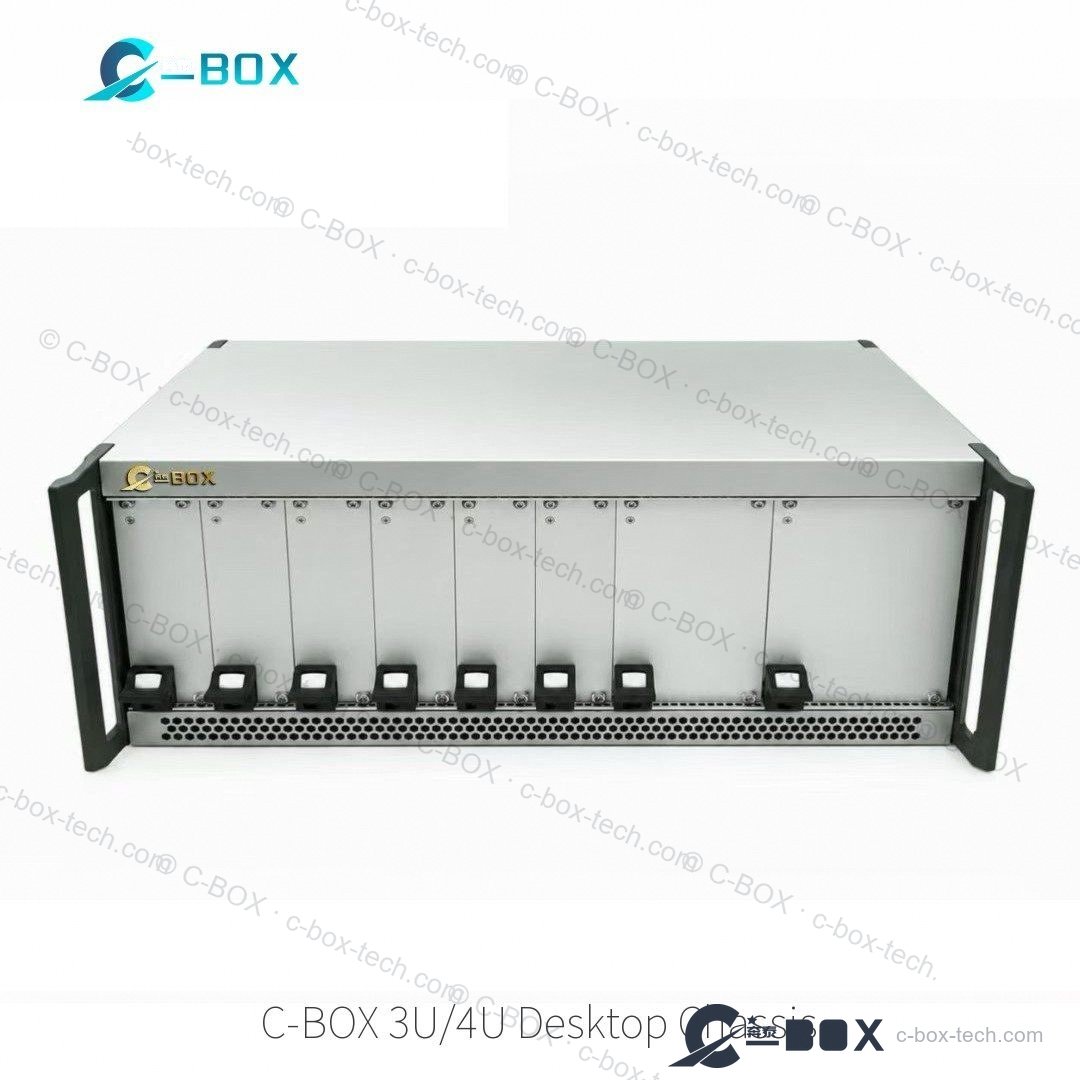
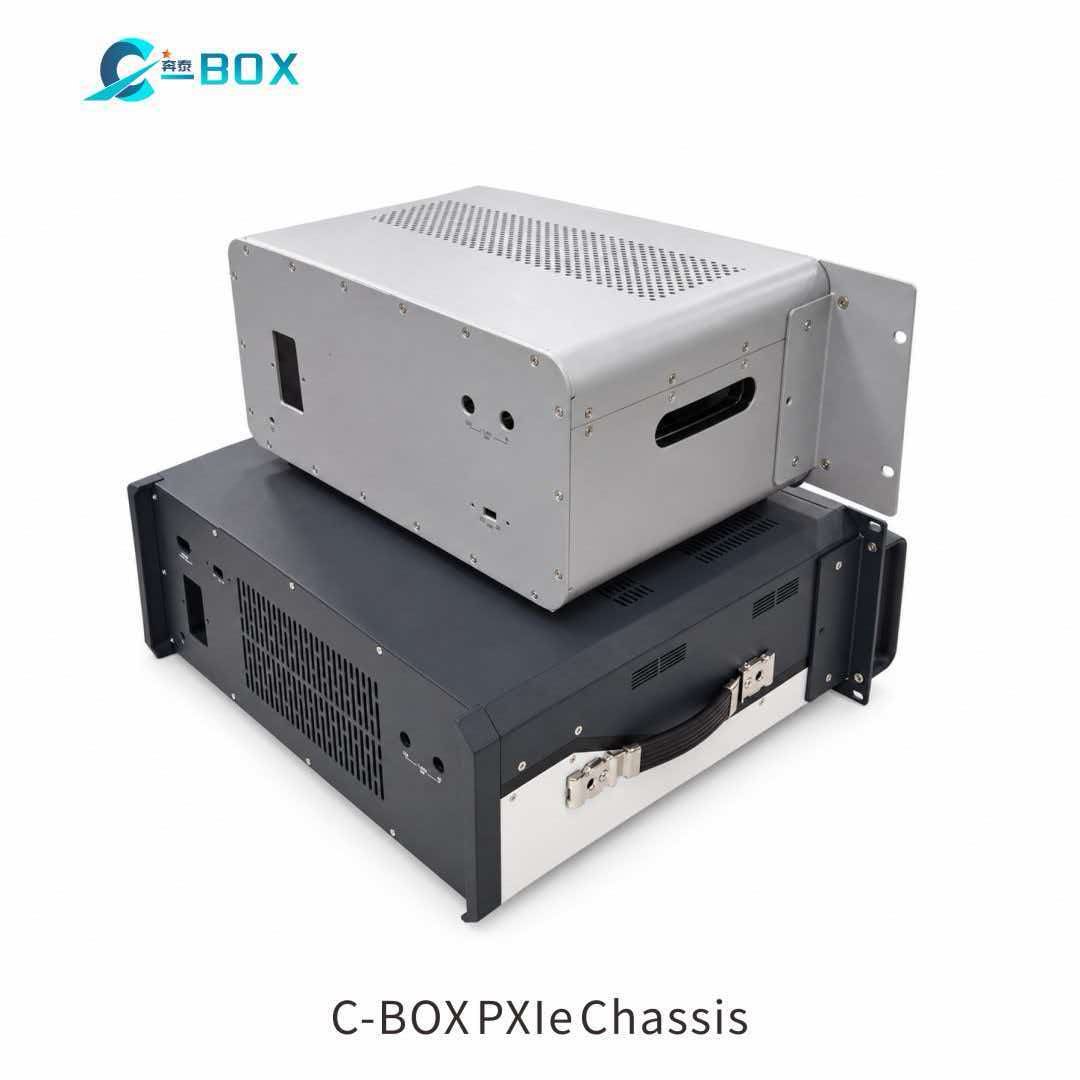
PXI systems live and die by their mechanical platform. C-BOX builds PXI and PXI Express chassis around your backplane — our reference desktop unit follows IEC 60297-3-101 / -102 / -103 and IEEE 1101.1 / .10 / .11 with a PICMG 3.0 / PXI 2.0 backplane: 4U / 44HP housing, vertical card cage for eight 3U × 160 mm modules, 64-bit backplane with system slot on the left, and dedicated trigger routing. Airflow runs from the bottom intake to the rear exhaust; a 400 W ATX PSU with wide-range AC input and rear power switch feeds the system, and the backplane supports internal / external clock switching for synchronized instruments. Slot count, depths, rails and panel machining are configured to order.
| Format | 3U PXI · PXI Express (PXIe), 19″ / desktop |
| Standards | IEC 60297-3-101/-102/-103 · IEEE 1101.1/.10/.11 |
| Backplane | PICMG 3.0 · PXI 2.0, 64-bit, system slot left |
| Reference unit | 4U / 44HP, 8 slots, 3U × 160 mm modules |
| Power | 400 W ATX, wide-range AC input, rear switch |
| Cooling | bottom-to-rear forced air, sized to module power |
| Clock | internal / external clock switching |
Product videos
An English walkthrough of our 18-slot PXIe chassis — front handles and flange for rack or desktop use, 36 EMC guide rails with ESD, fan and rear I/O — followed by an assembly clip from our workshop.
18-slot PXIe chassis walkthrough (English, 3 min)
C-BOX PXIe / instrument chassis assembly
Inside the Box — the series
Every episode we open the box on how our chassis are engineered, tested and proven. In EP01, our toughest customer asks for proof — so a PXIe chassis goes through the Q/CR 782 railway salt-mist corrosion test. The independent lab report behind the episode (STIEE 23BAS01P35D32-00598) is published on this site, verifiable.
Inside the Box EP01 (English, 1 min) — more episodes coming every week
Same interface dimensions as the nVent SCHROFF equivalents — our own tooling, material and finish.
Every model has its own page with specifications and RFQ. Use your browser search (Ctrl/Cmd+F) on this page, or send us the number and we will quote it.
Self-developed desktop and rackmount platforms. Every model has its own page with specifications and RFQ.
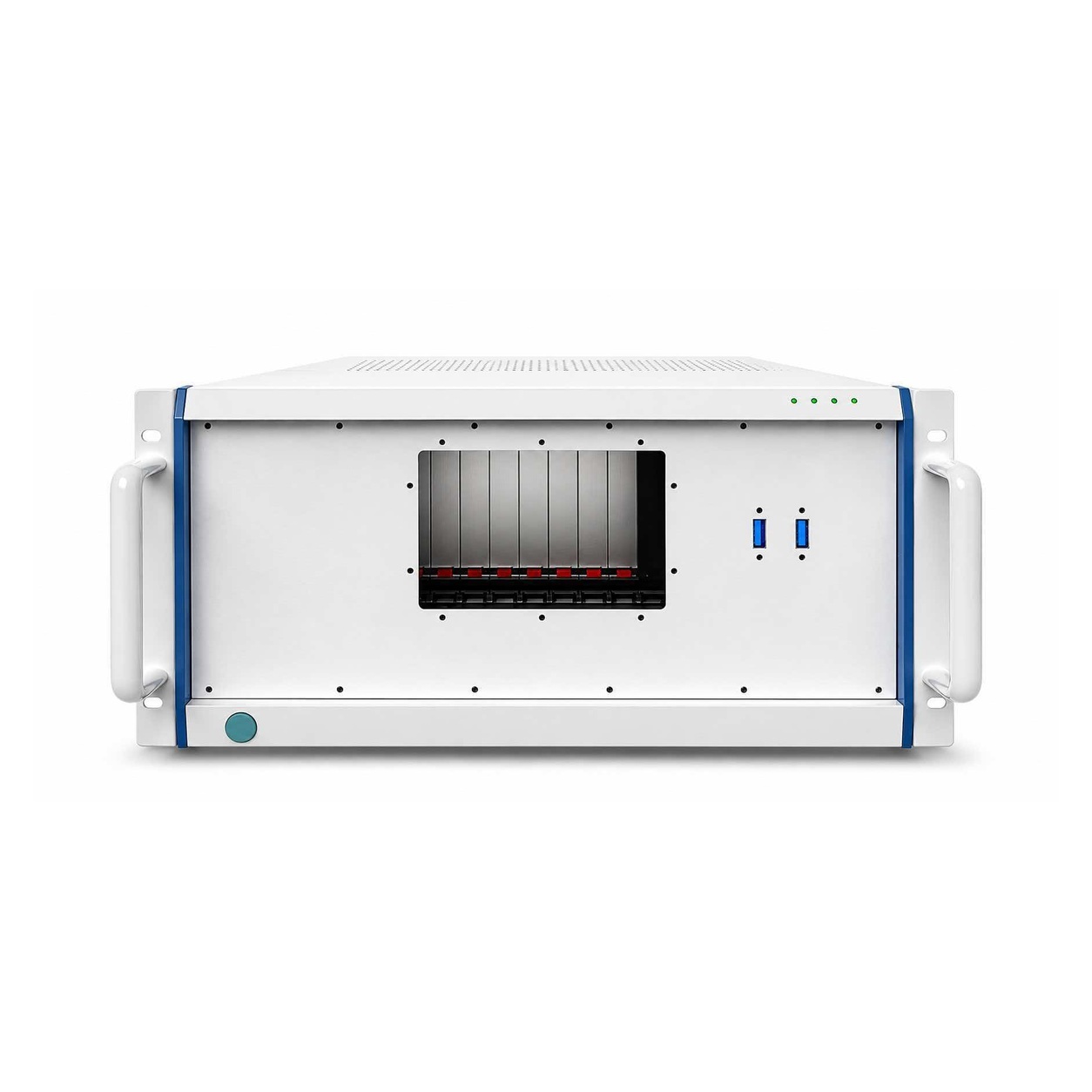 19-Slot PXI Rackmount Chassis
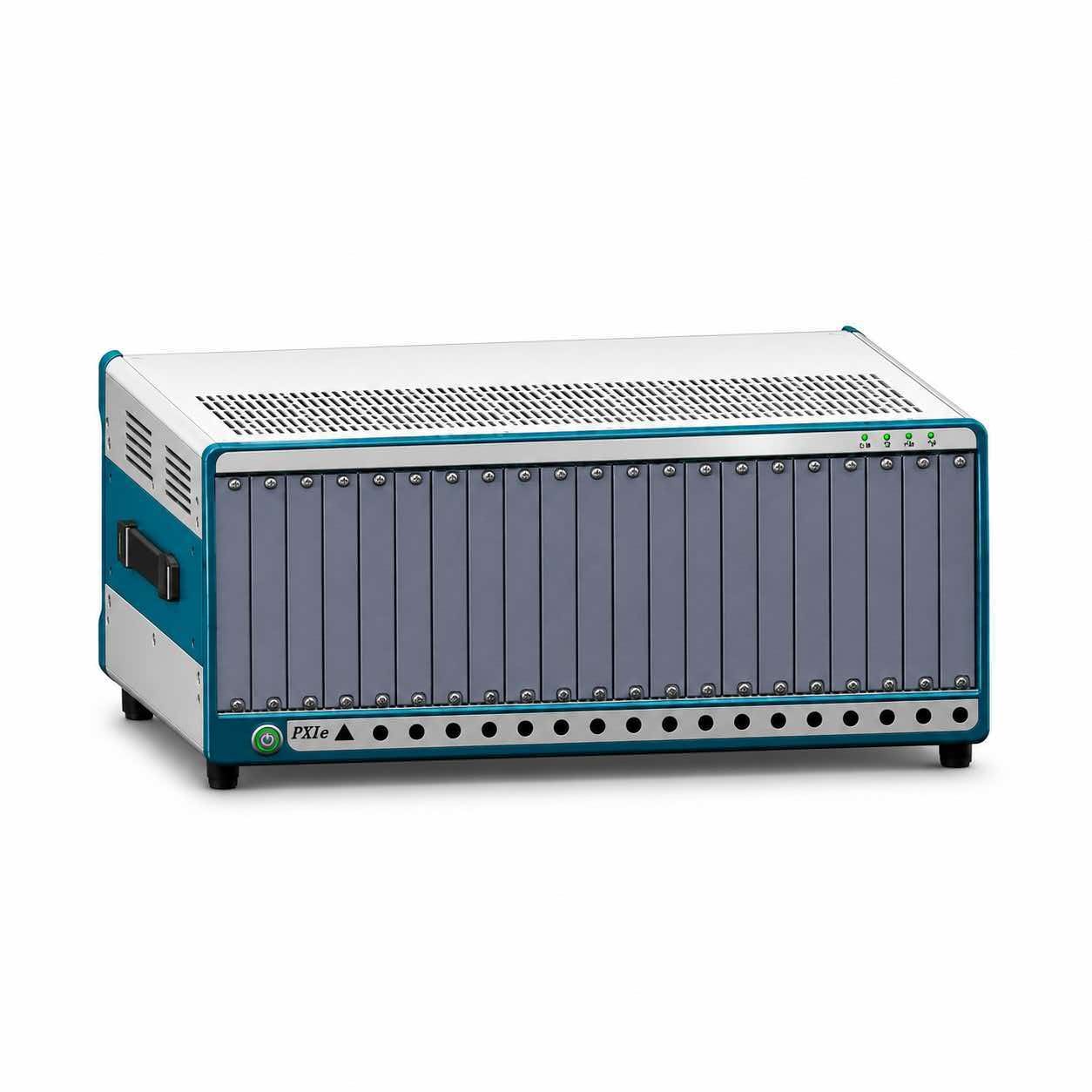 18-Slot PXIe Desktop Chassis
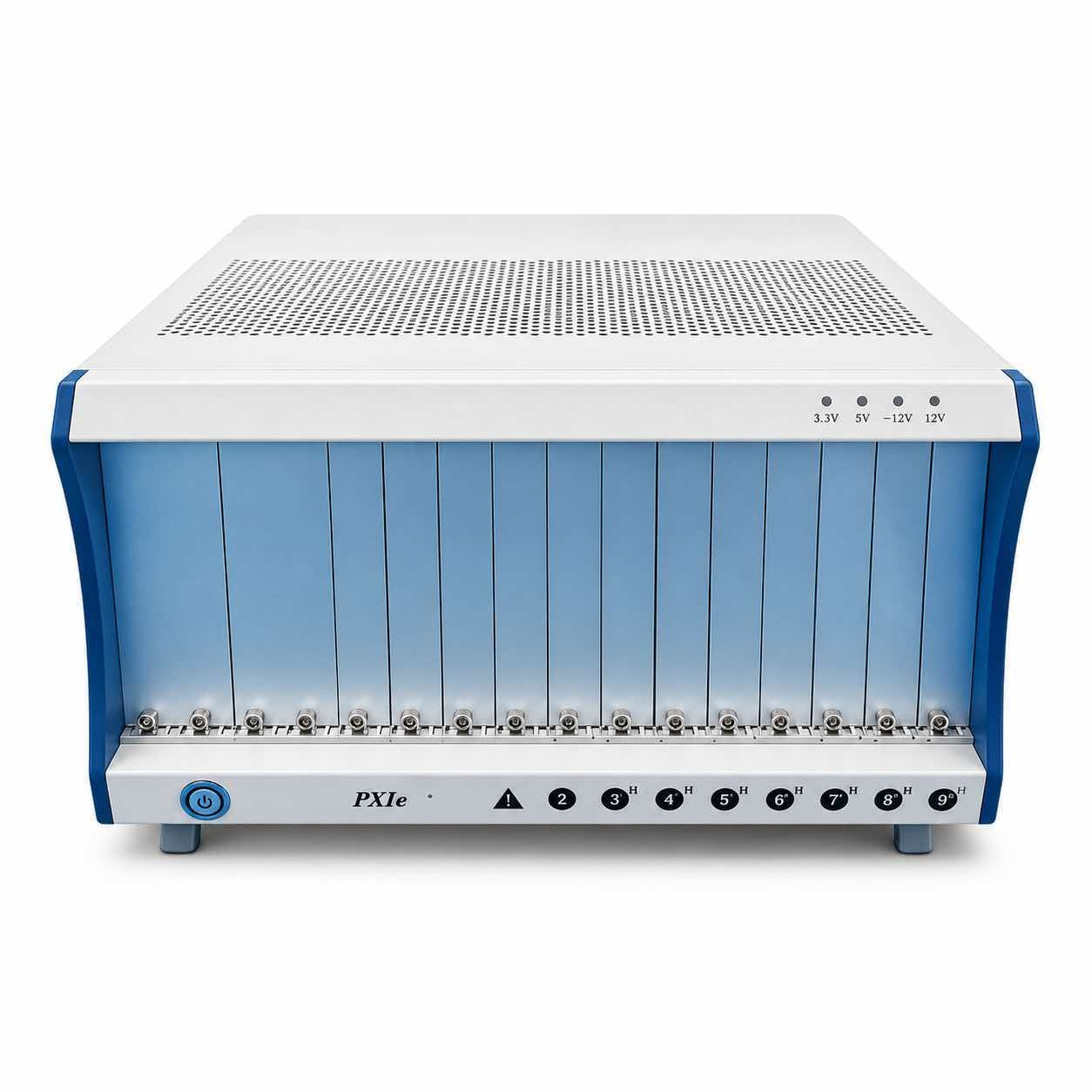 9-Slot PXIe Desktop Chassis
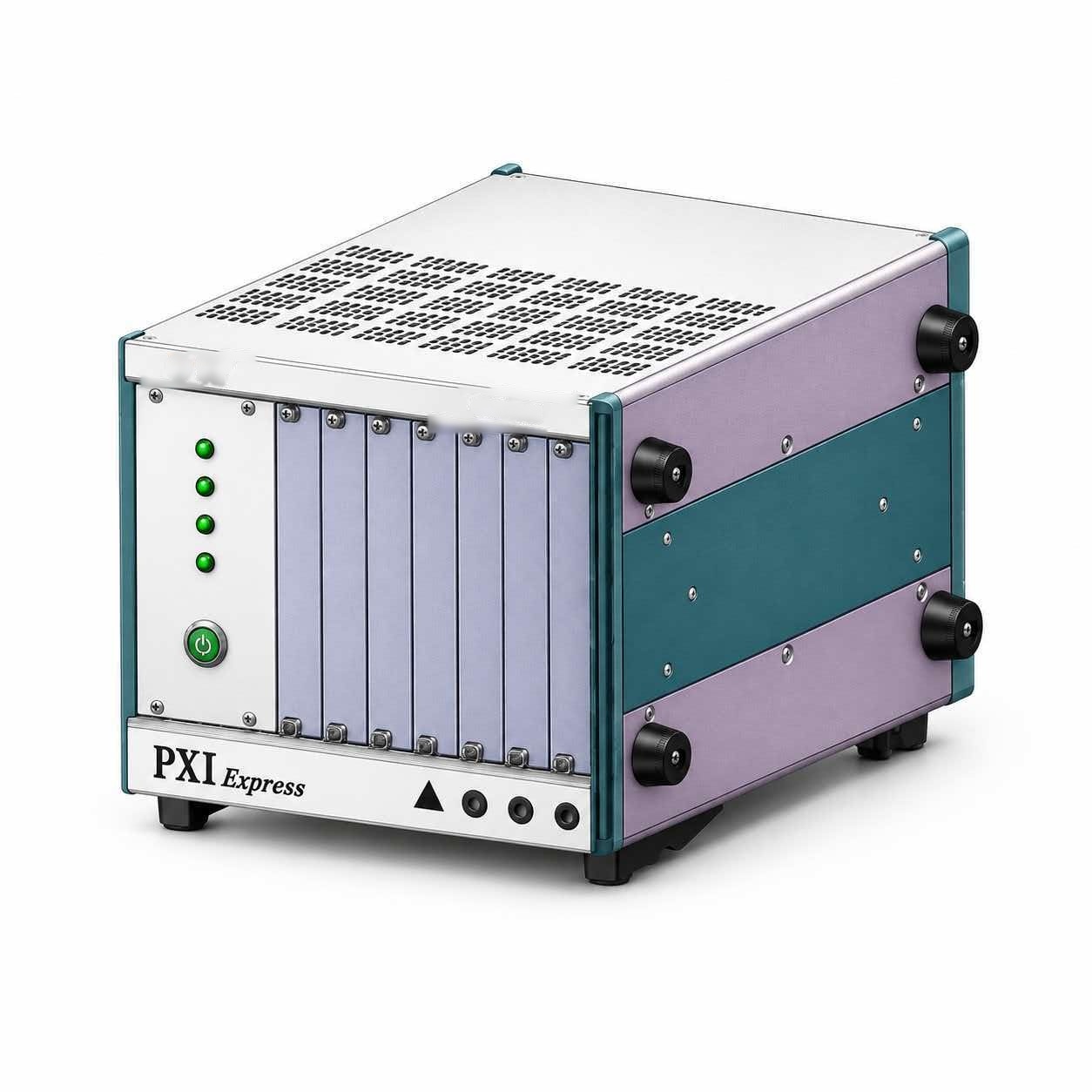 8-Slot PXI Express Compact Chassis
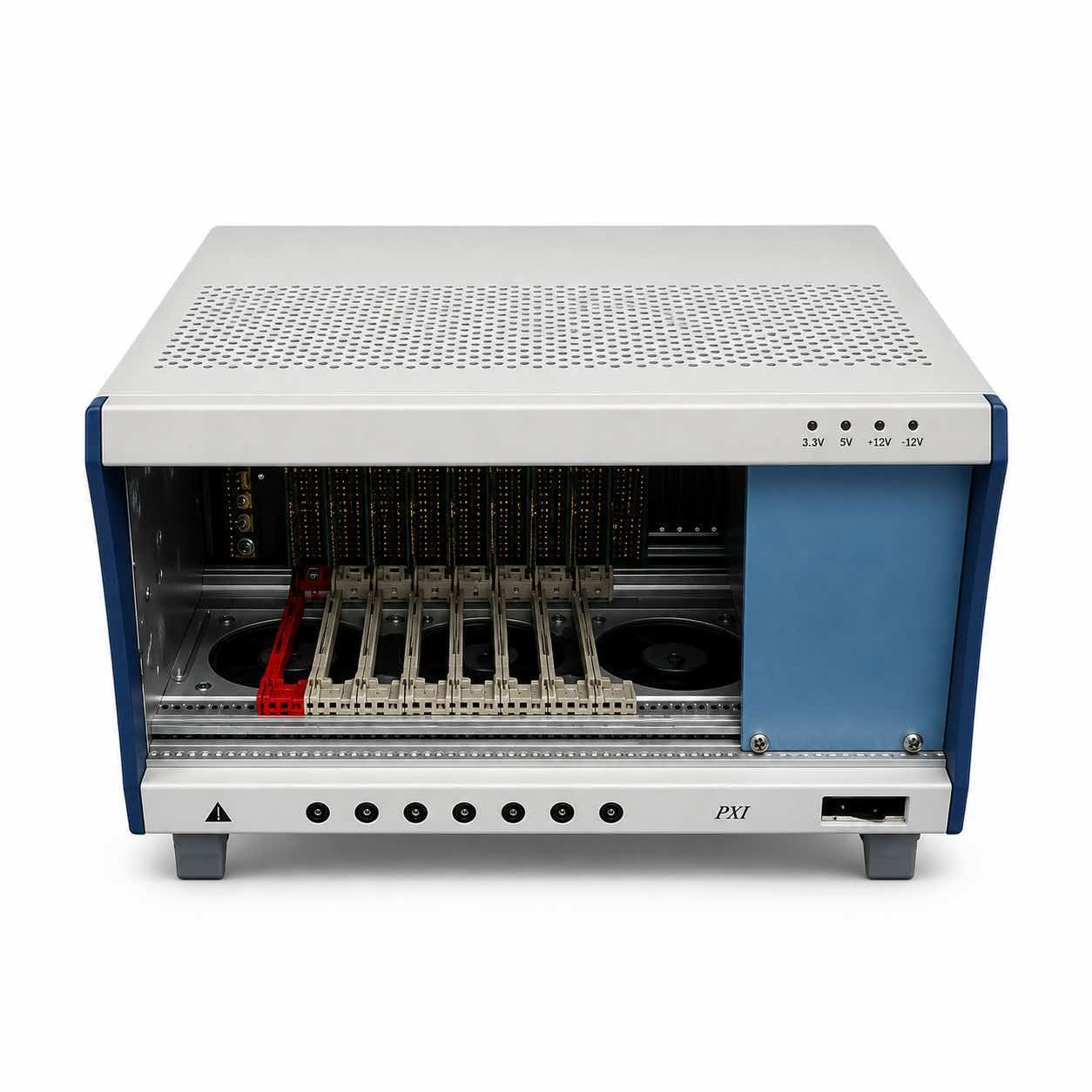 7-Slot PXI Benchtop Chassis
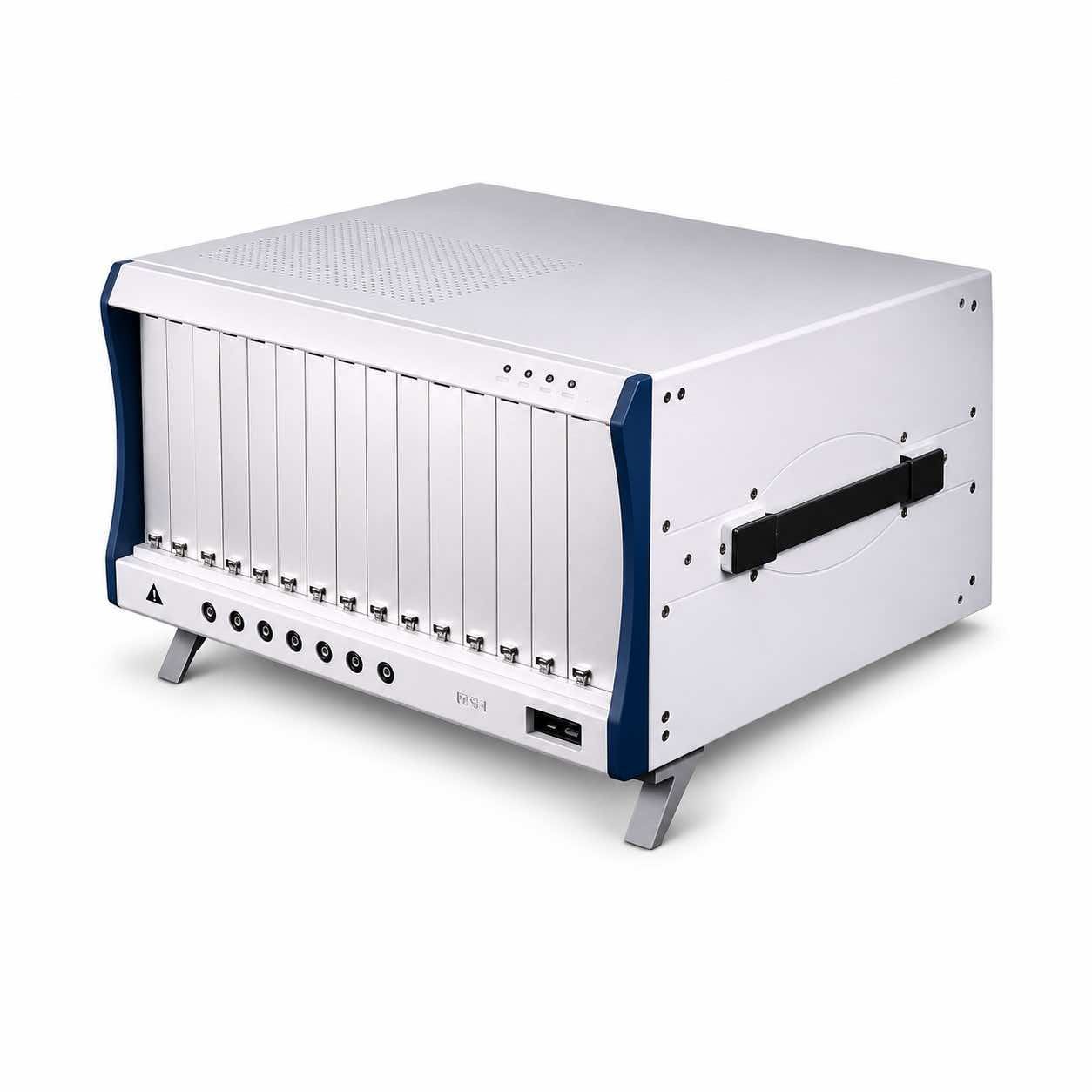 18-Slot PXI Desktop Chassis
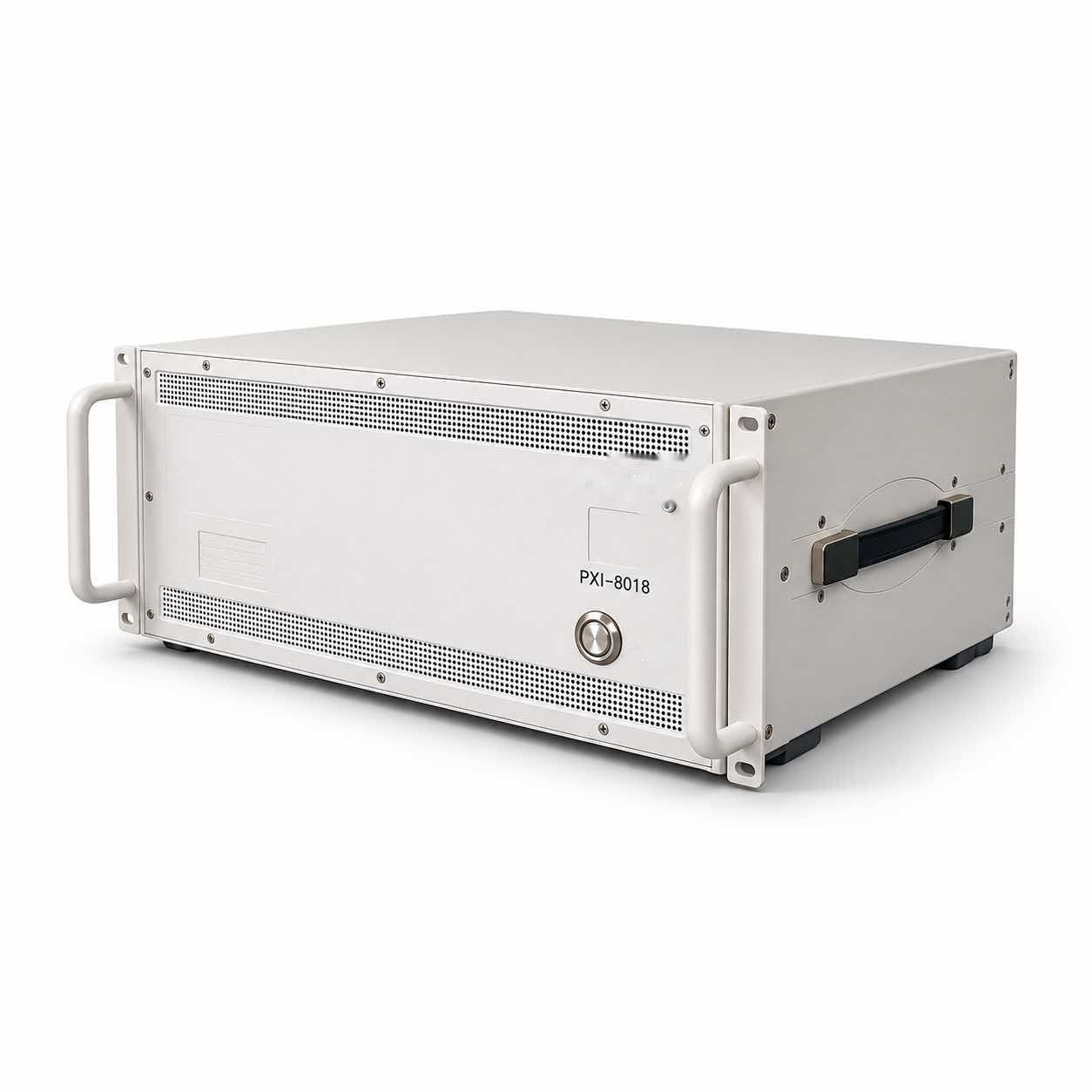 4U Hybrid Instrument Chassis
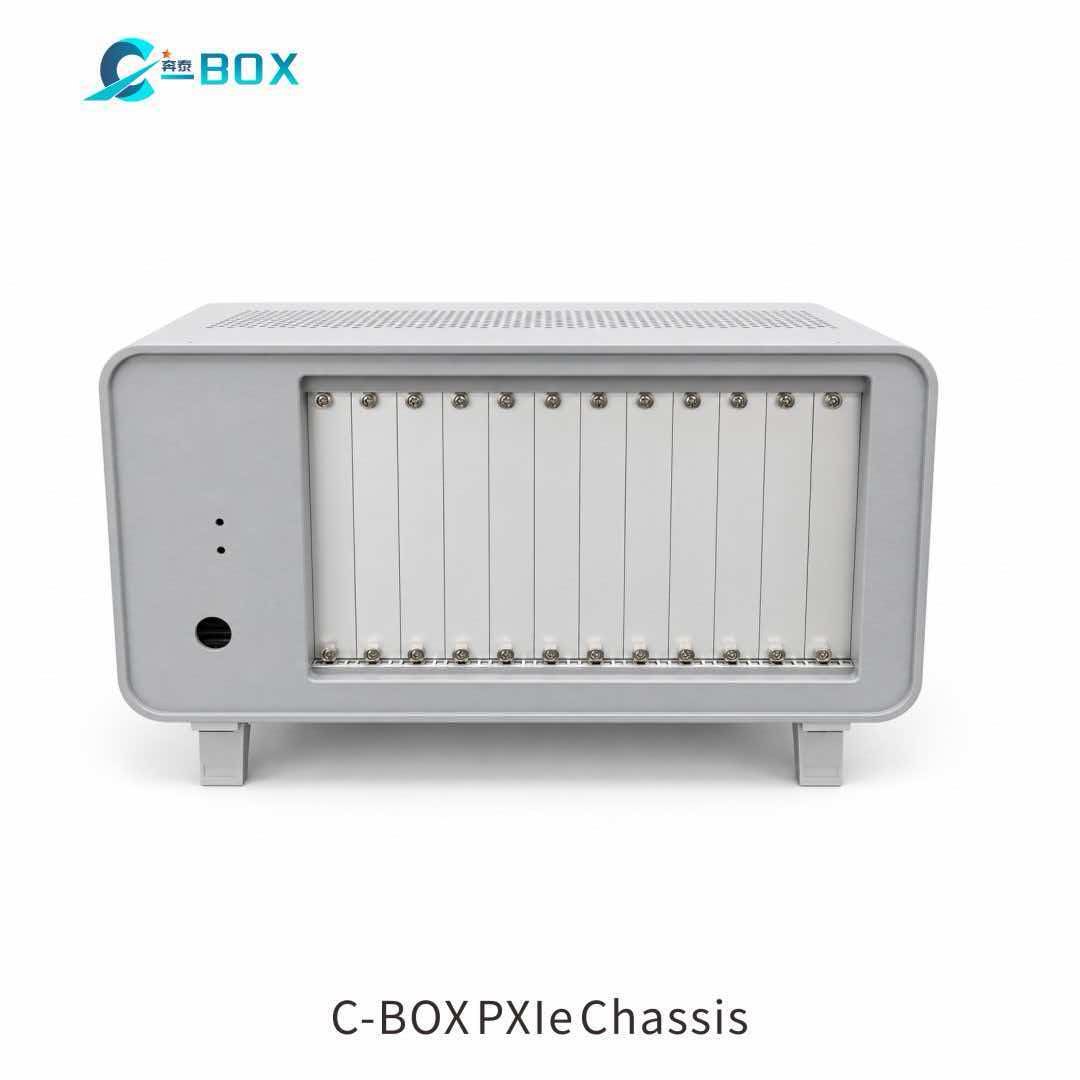 8-Slot PXIe Desktop Chassis
Photo gallery
Workshop photos of both PXIe platforms: the 8-slot 4 U / 52 HP desktop chassis and the 18-slot rack chassis with front handles and flange.
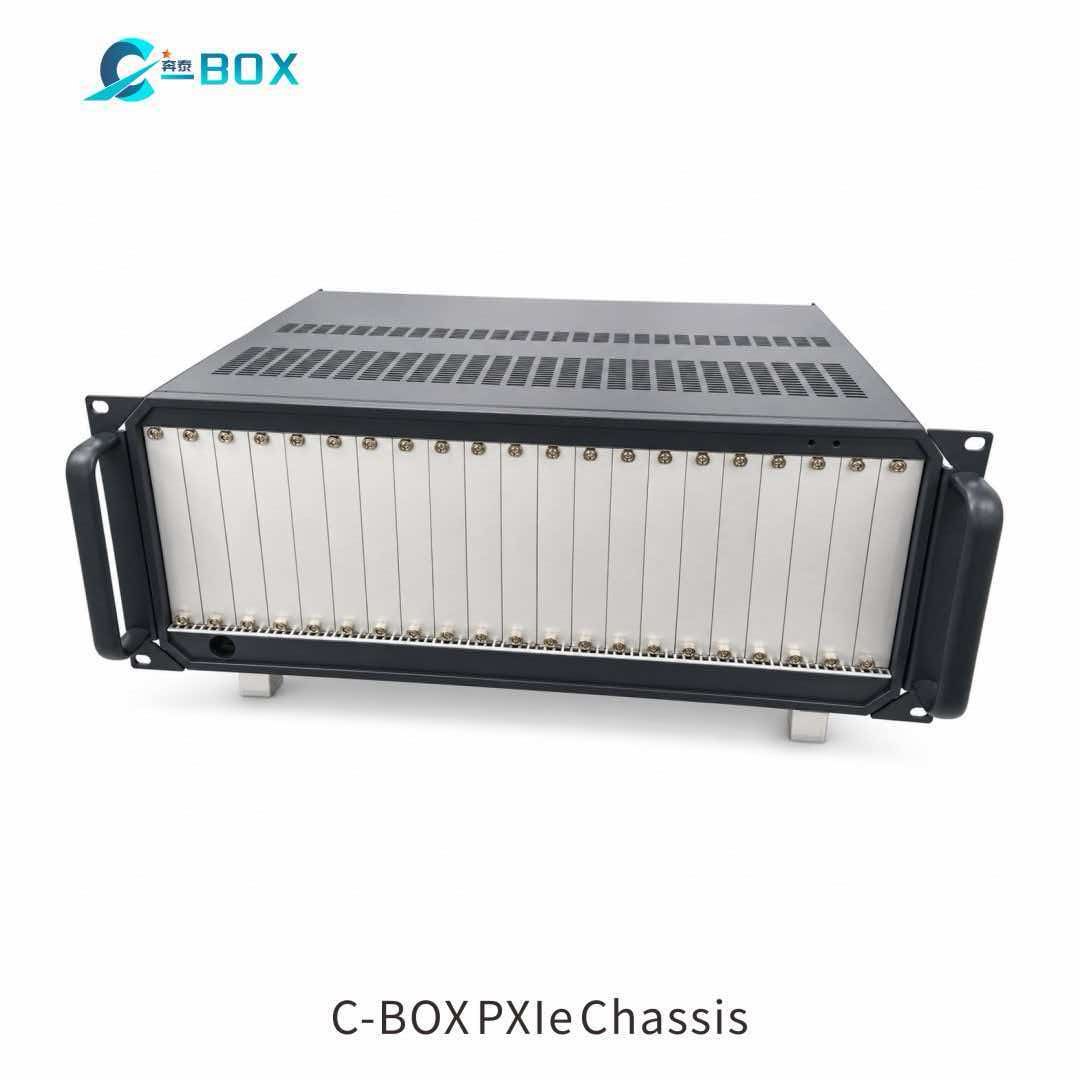
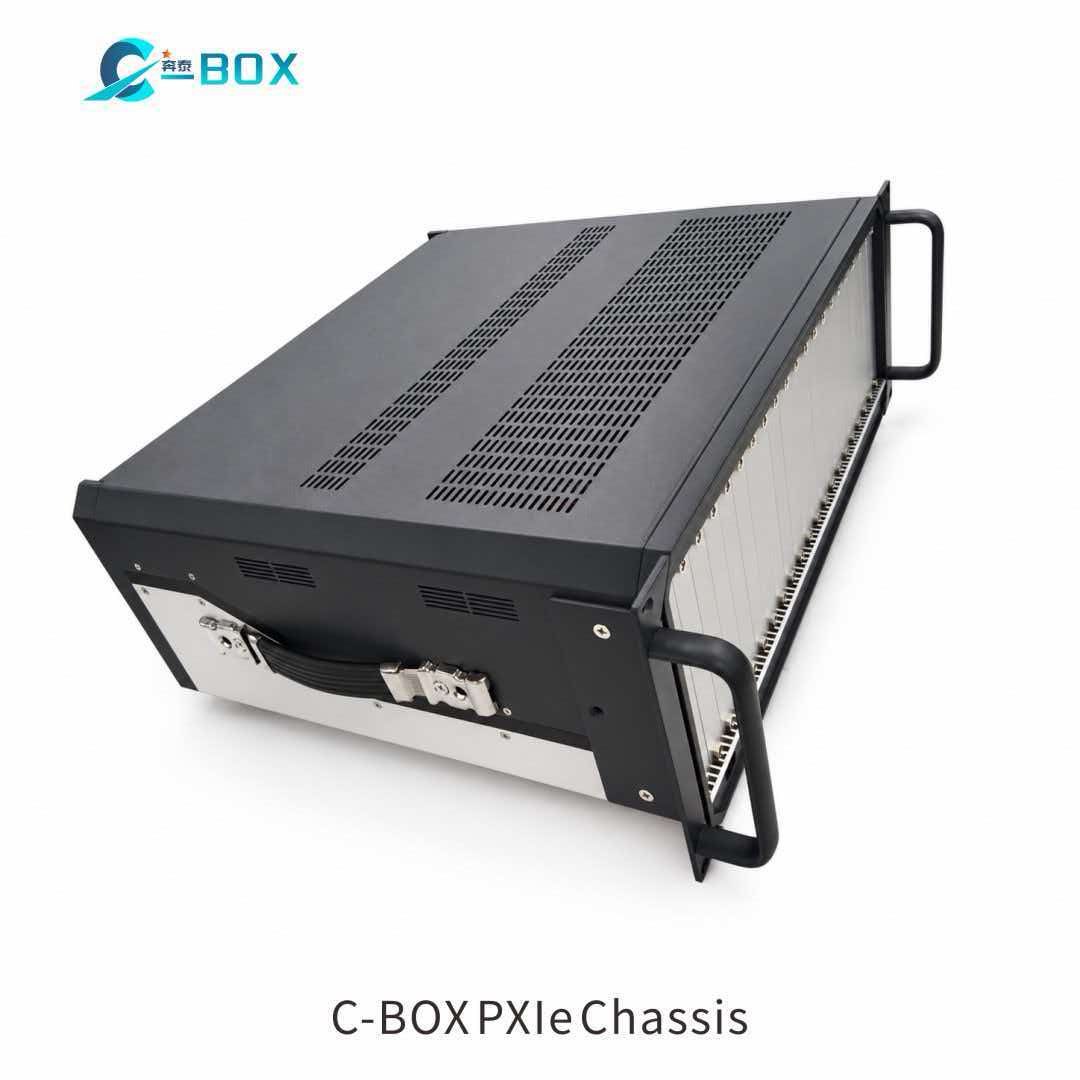
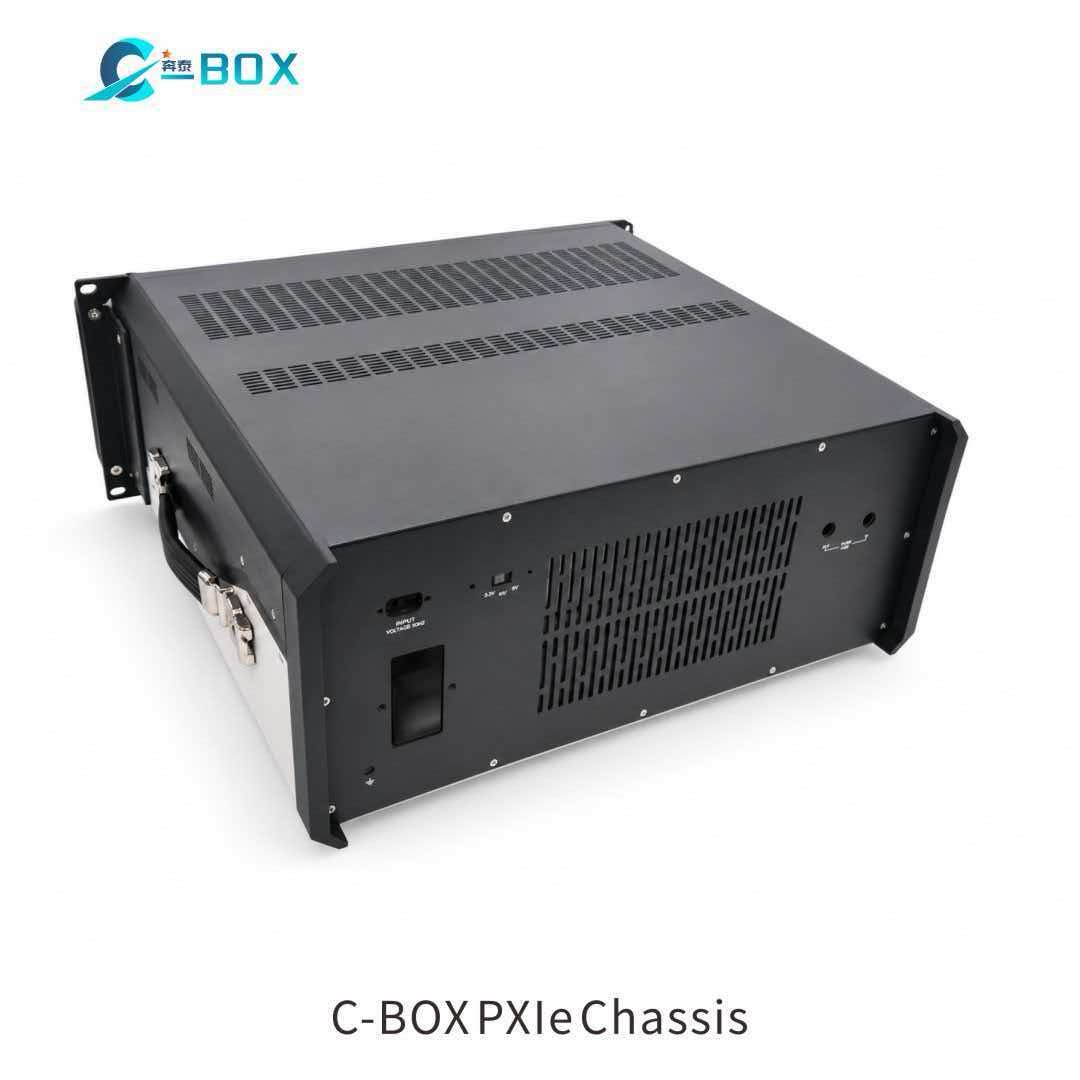
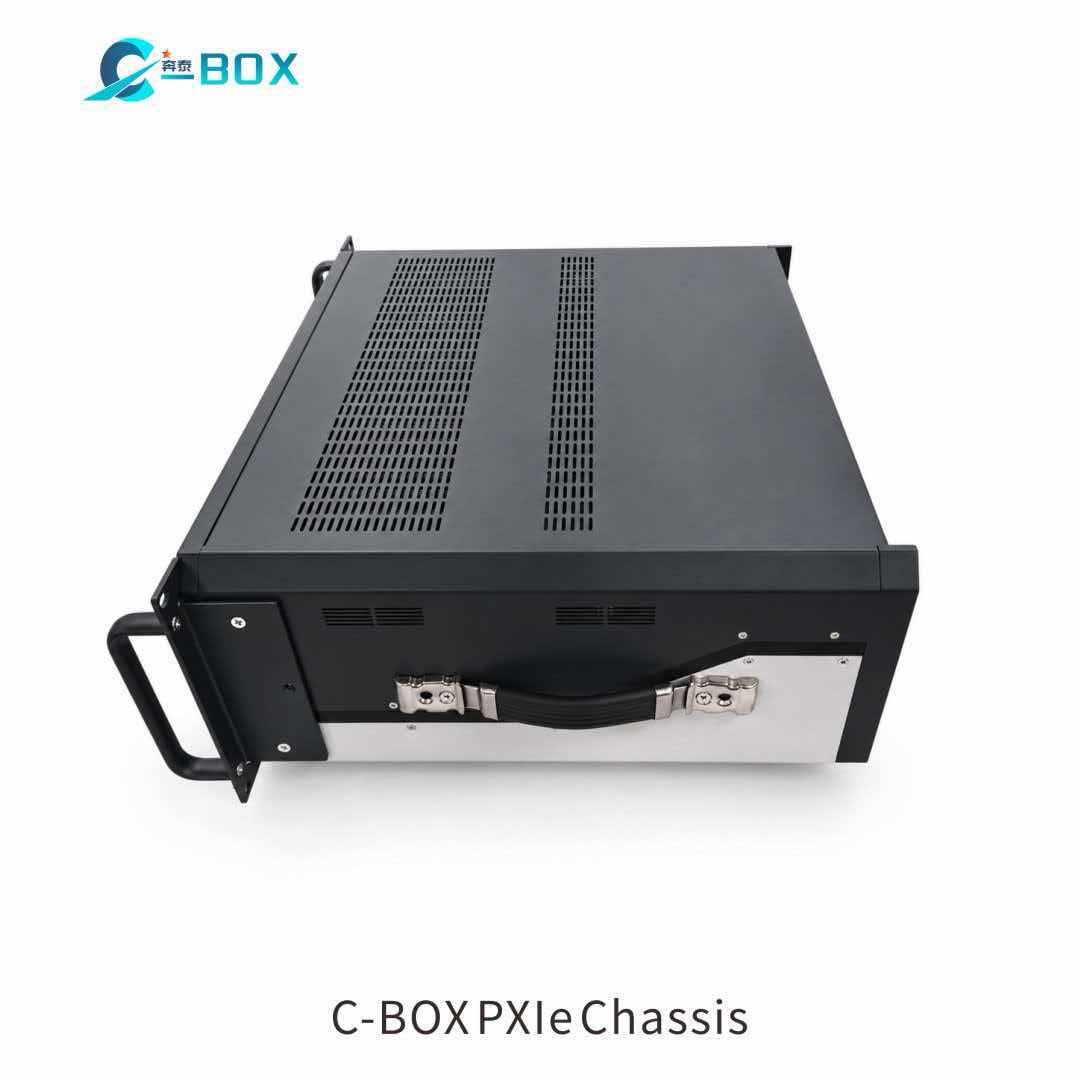
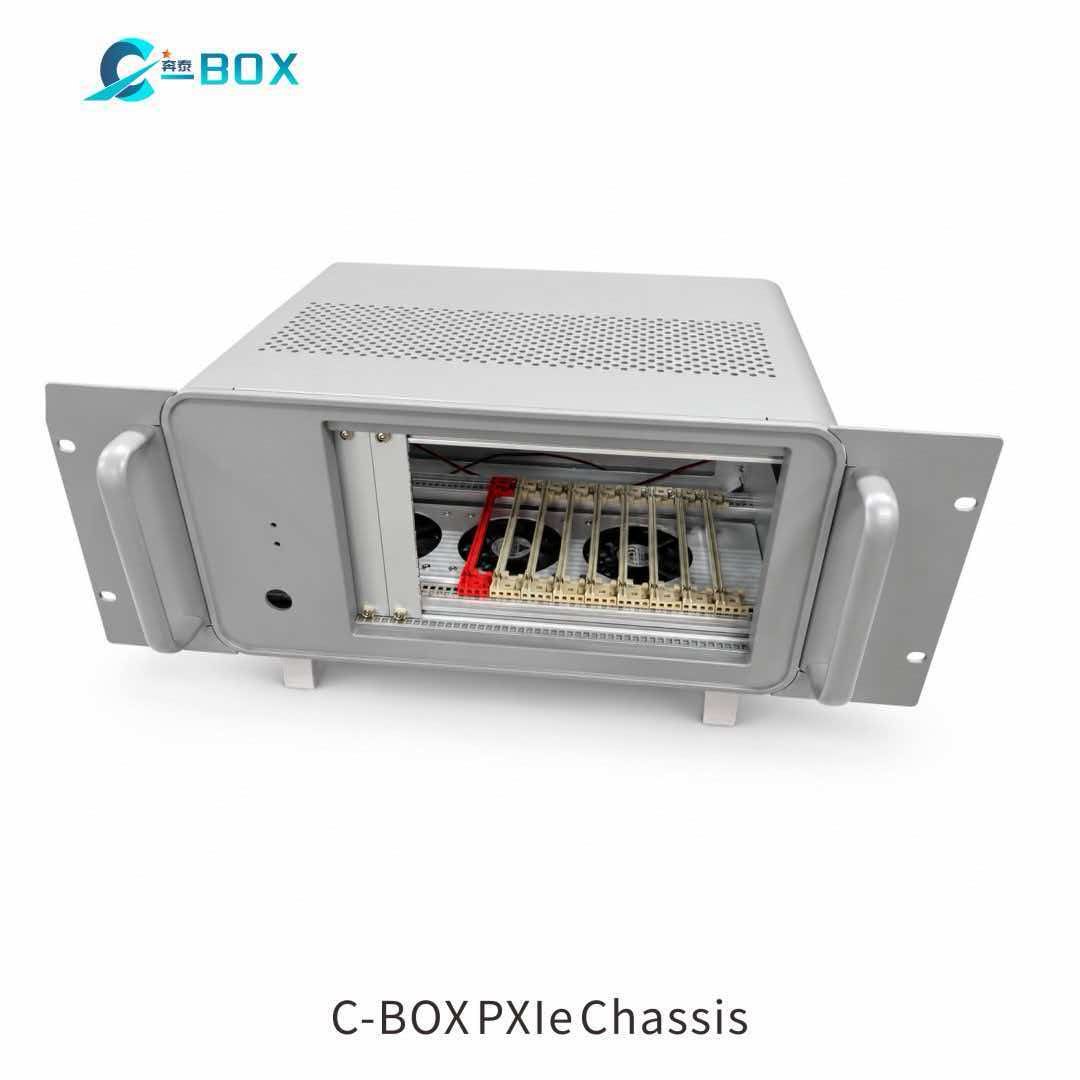
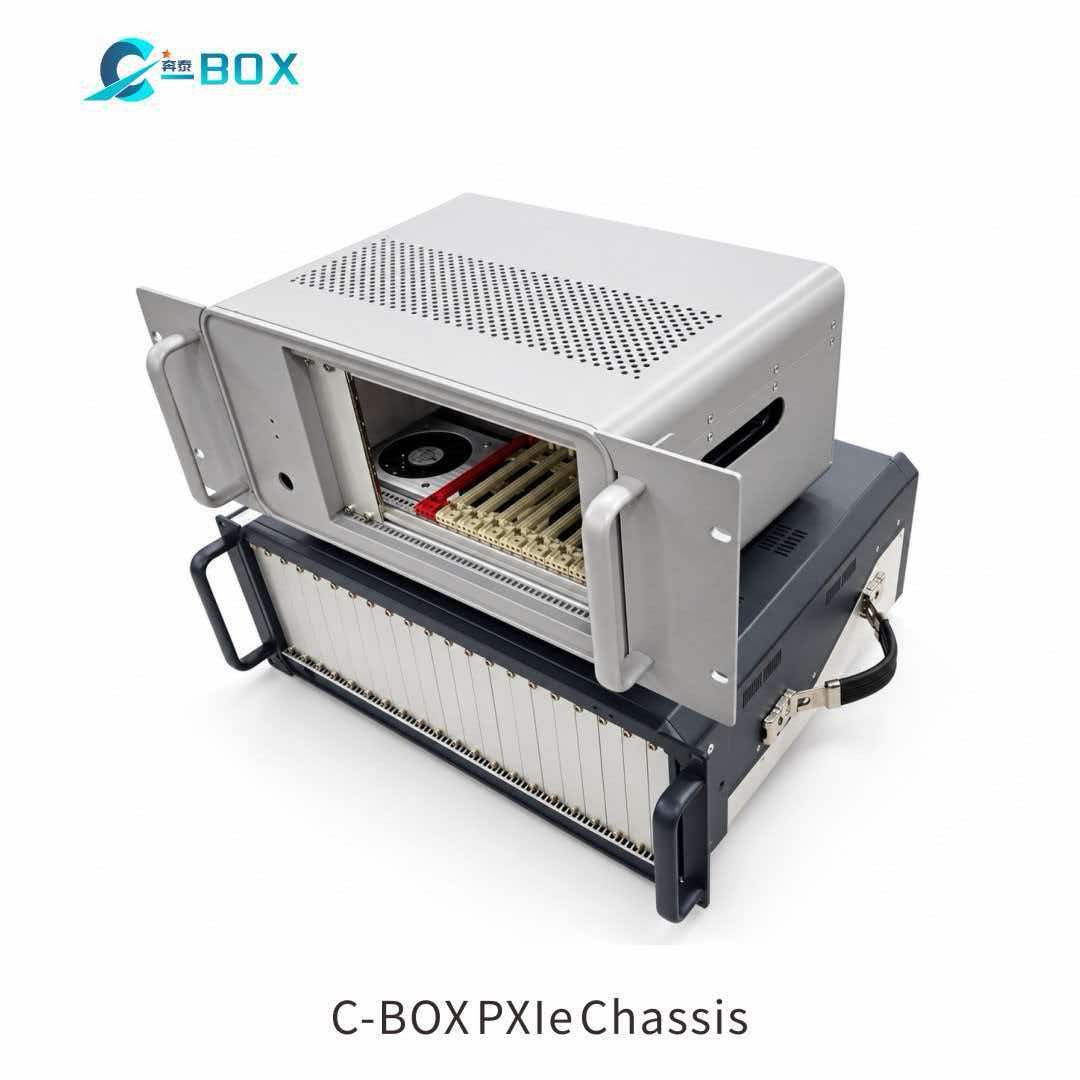
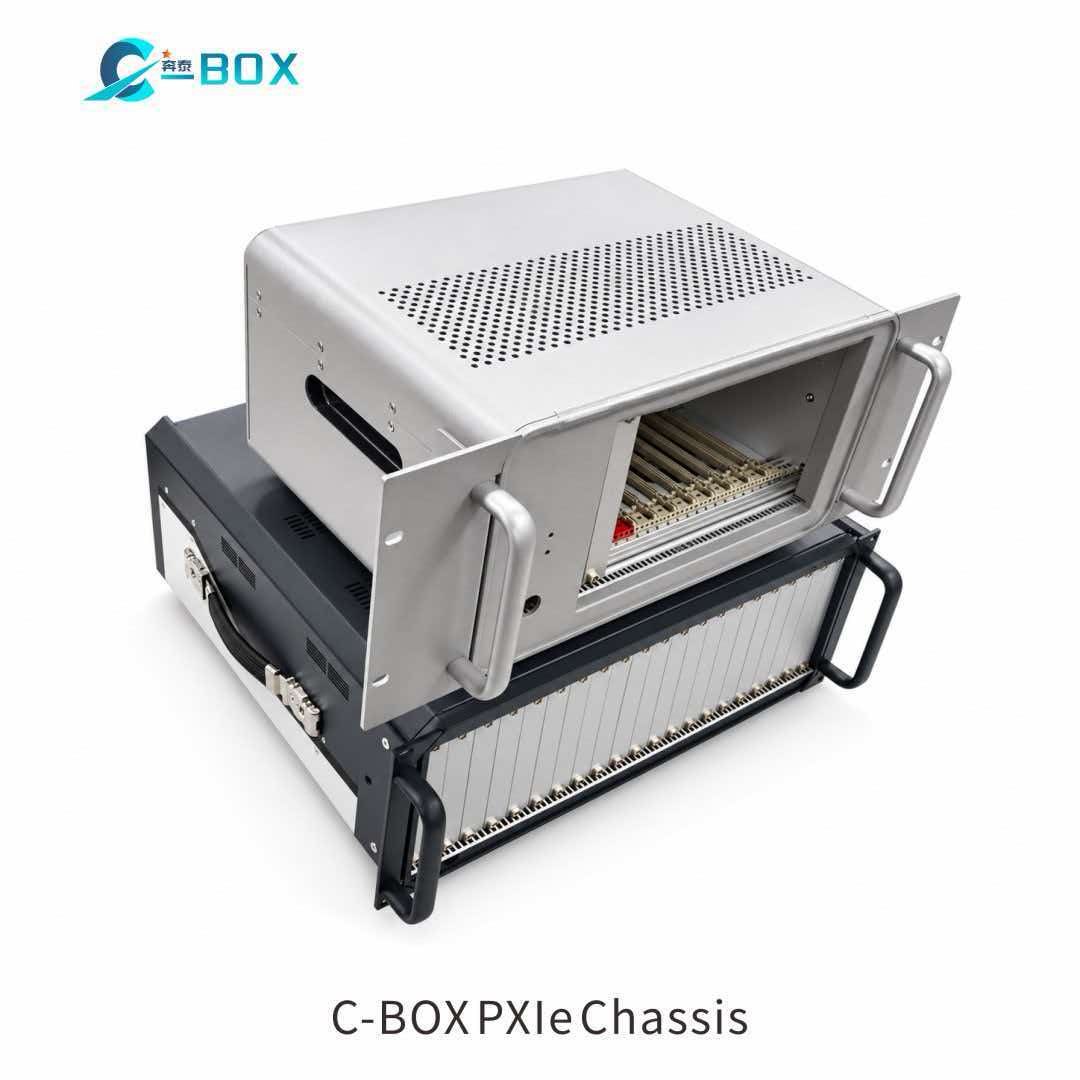
Two PXIe chassis with the same slot count are not interchangeable. What separates them is which slots are system, hybrid or PXI-1 compatible, how much cooling each slot gets, and whether the backplane distributes a common clock.
| Slot type | What fits | Where it matters |
|---|---|---|
| System slot | the controller, always slot 1 | sets the number of downstream lanes available |
| Hybrid slot | PXIe or legacy PXI-1 modules | the pragmatic choice when the card set is mixed |
| PXIe-only slot | PXIe modules only | more bandwidth per slot, no legacy support |
| Timing / trigger slots | star trigger, system reference clock | matters for synchronised acquisition above about 10 MS/s |
PXI Express specifies a minimum cooling capability per slot, and a chassis that meets it still has to cope with real modules: digitizers, high-speed serial instruments and embedded controllers running near their thermal limit. A multi-slot module draws its heat budget from several slots, so a chassis that is comfortable with single-slot cards can be marginal with a wide module. State the total dissipation and the ambient at the intake, not just the module count.
An 8 or 9-slot desktop chassis is quiet and bench-friendly; an 18-slot rack chassis gives more bandwidth and cooling headroom but needs a cabinet and a front-to-rear airflow path. Moving a working bench setup into a rack is a common project, and the mechanical difference is the mounting: a desktop unit sits on feet, a rack unit becomes part of the cabinet airflow.
Where this product line is typically used.
The slot count in a PXI Express chassis is mostly a budget for modules you have not bought yet. An 8-slot cage is normally one system controller slot plus seven hybrid or PXIe peripherals, and it maps onto a 4U / 44 HP desktop format — the 8-slot 4U/52HP desktop build is the model we ship most for bench test and lab automation. A 9-slot cage adds one more peripheral for a DMM, switch or SMU that would otherwise need a second chassis, at the cost of a wider frame and a bigger cooling budget. The 8-slot vs 9-slot selection guide walks through slot allocation per module class, and the 9-slot page lists what changes mechanically.
The same 8-slot mechanics are sold in two shells: a benchtop case with a carry frame and instrument feet, or a 19-inch subrack for a rack cabinet with the fan unit in a separate 1U tray. A 42 HP wide desktop case such as the 3U / 42HP RatiopacPRO desktop case (24571-017) covers single-purpose instruments, while 44 to 52 HP shells leave room for a rear transition area and cable exit. Rack builds above 9 slots are configured per project — slot count, fan tray height and PSU rating are confirmed against your module list rather than quoted as a standard product.
PXIe sits in the same 3 U IEEE 1101 Eurocard family as the rest of our range, so switching bus does not mean switching mechanics: PICMG 2.0 CompactPCI chassis for the cPCI payload that shares the backplane envelope, IEC 60297 84 HP subracks when you assemble the cage yourself, and rugged 3U OpenVPX chassis where the same instrument rack has to survive shock and vibration. Guide rails, coded panels and 700 N handles are common across all four lines.
We manufacture the mechanics rather than resell them. The chassis, the card cage, the 19″ flange, the front panels and the guide rails come off our own lines: the Kunshan plant (6,000 m², since 2016) does the sheet metal and machining — CNC punching, press braking, turning and milling, assembly — and the Hefei plant (23,000 m²) does the cabinets and the surface finishing, with anodising, painting and powder coating approved in-house. Roughly 100 people group-wide, 20+ engineers and a dedicated incoming / in-process / final inspection team. Chassis from this line are exported to Europe, Korea, India, Southeast Asia and North America.
| Item | Where it comes from |
|---|---|
| Chassis shell, card cage, 19″ flange | Kunshan plant — punched, formed, welded, machined, assembled |
| Front panels, filler panels, brackets | Kunshan plant — milled and printed to your drawing |
| Guide rails, ESD clips, handle sets | Kunshan plant, same tooling as our subrack range |
| Anodising, painting, powder coating | Hefei plant — in-house lines |
| Backplane | Built with backplane specialists to PICMG 3.0 / PXI-2.0; a backplane you already specify can be fitted instead |
| PSU, fans, connectors | Standard industrial parts, to your approved brand list |
Because the mechanics are ours, a different slot count, a deeper cage or an extra panel cut-out is a drawing change, not a new supplier qualification. Standard parts ship in about 10 days; a configured chassis is quoted with its own lead time. MOQ is stated per model, FOB Shanghai quoted on request, payment by T/T or L/C. OEM builds with your logo, your panel print and your label are routine — send the drawing and we quote the tooling as a separate line if any is needed.
The same 3U mechanics are sold two ways. A PXIe subrack is the 19″ cage on its own — 3U × 84 HP or a cut width, guide rails, EMC gaskets, ESD clips and front panels — for teams that already have a backplane, a PSU and a fan tray, or that build the electronics themselves. A complete PXIe chassis adds the backplane, the cooling and the power supply in one frame, assembled and powered up before it leaves the plant.
Which one to quote depends on what you already own. If the backplane and the instrument set are fixed, a subrack plus your existing fan tray is usually the cheaper route and keeps the bill of materials under your control. If the chassis itself is the product you ship, the integrated build is the one to specify, because slot mix, airflow and PSU rating have to be verified together rather than piece by piece. Standard 3U / 6U subracks and the rails, EMC and ESD hardware cover the first case; the 8-slot desktop chassis and the 18-slot desktop build cover the second.
Both routes are machined to the same IEC 60297 hole pattern, so a subrack installed now can be developed into a full chassis later without re-drilling the rack or changing the cabinet cut-out.
Parts that usually go together with PXIe Chassis.
Related categories
The reference unit is complete mechanics: a 4U / 44 HP housing for eight 3U x 160 mm modules, 64-bit PICMG 3.0 / PXI 2.0 backplane with the system slot on the left, internal / external clock switching, a 400 W wide-input ATX PSU and bottom-to-rear airflow.
Yes. Slot count, depths, rails and panel machining are configured to order, and the backplane is matched to the instrument set - including trigger routing and clock distribution.
Airflow runs from the bottom intake to the rear exhaust and is sized to module power, with instrument-grade cooling as part of the platform rather than an add-on.
The plants are ours: Kunshan makes the chassis, card cages and sheet metal, Hefei makes the cabinets and runs the finishing lines. Backplanes are built with backplane specialists to the standard you specify, and the PSU, fans and connectors are standard industrial parts bought to your approved brand list. We do not relabel another maker's chassis as our own.
Only if the cage has hybrid slots. A PXIe-only slot carries the PCIe lanes and will not accept a PXI-1 card; a hybrid slot has both connector sets, with the PXI-1 portion shortened. The mix is fixed when the backplane is specified, so list the legacy cards before the RFQ rather than after.
Count the controller and every module you will own in the next two years, not only the ones on the bench today. Adding a switch, a DMM or an SMU later usually pushes an 8-slot build into a 9-slot, and that changes the frame width and the cooling budget, not just the slot count.
Yes. Cage only, cage with rails, or cage with front panels — the 19″ subrack is a catalog item in its own right, and many customers take the cage from us and fit their own backplane and cooling.
Yes, for standard parts, at no cost: a dimensioned outline drawing with slot positions and mounting holes, plus a STEP model. Download them from the CAD models page or send the part number and we return the pair.
About 10 days for standard catalog parts, longer for a configured chassis or a new panel design; the quotation states the lead time for the actual configuration. FOB Shanghai is quoted on request, payment by T/T or L/C.
Yes — build-to-print is most of our export work. Send the drawing or the cross-reference number; where a 19″ nVent SCHROFF number is quoted, we match the interface dimensions (panel width, slot pitch, hole pattern) and keep our own material and finish unless your specification says otherwise.
On the 18-slot backplane in our range the rails are rated +5 V 29 A, +12 V 45 A, +3.3 V 60 A and −12 V 2.5 A, each at ±3% load regulation and 50 mV maximum ripple, fed from two 24-pin and two 8-pin ATX connectors; the ATX module is 500 W from 90–264 V AC. These are backplane ratings for that build, not the ratings of the 8-slot chassis above; treat them as a budget ceiling — add up module current per rail before the RFQ, because 60 A of 3.3 V is easy to exhaust with eight high-power instruments.
Slot-to-slot skew is 300 ps maximum on the 10 MHz reference and 100 ps on PXIe_CLK100, both at ±25 ppm internal accuracy. An external 10 MHz reference is accepted at ±100 ppm, 100 mV to 5 V, into 50 Ω. If the measurement depends on phase between modules, quote these figures to the instrument vendor: skew is set by the backplane, so changing it means changing the backplane, not the chassis.
Made in our own plants — chassis and precision parts from Kunshan, cabinets and surface finishing from Hefei: CNC punching, press braking, CNC machining, assembly, inspection and export packing in-house.
Kunshan plant →Hefei plant →Cross-referencing against major international 19″ system part numbers is our daily routine — we quote within 24 hours for standard items.